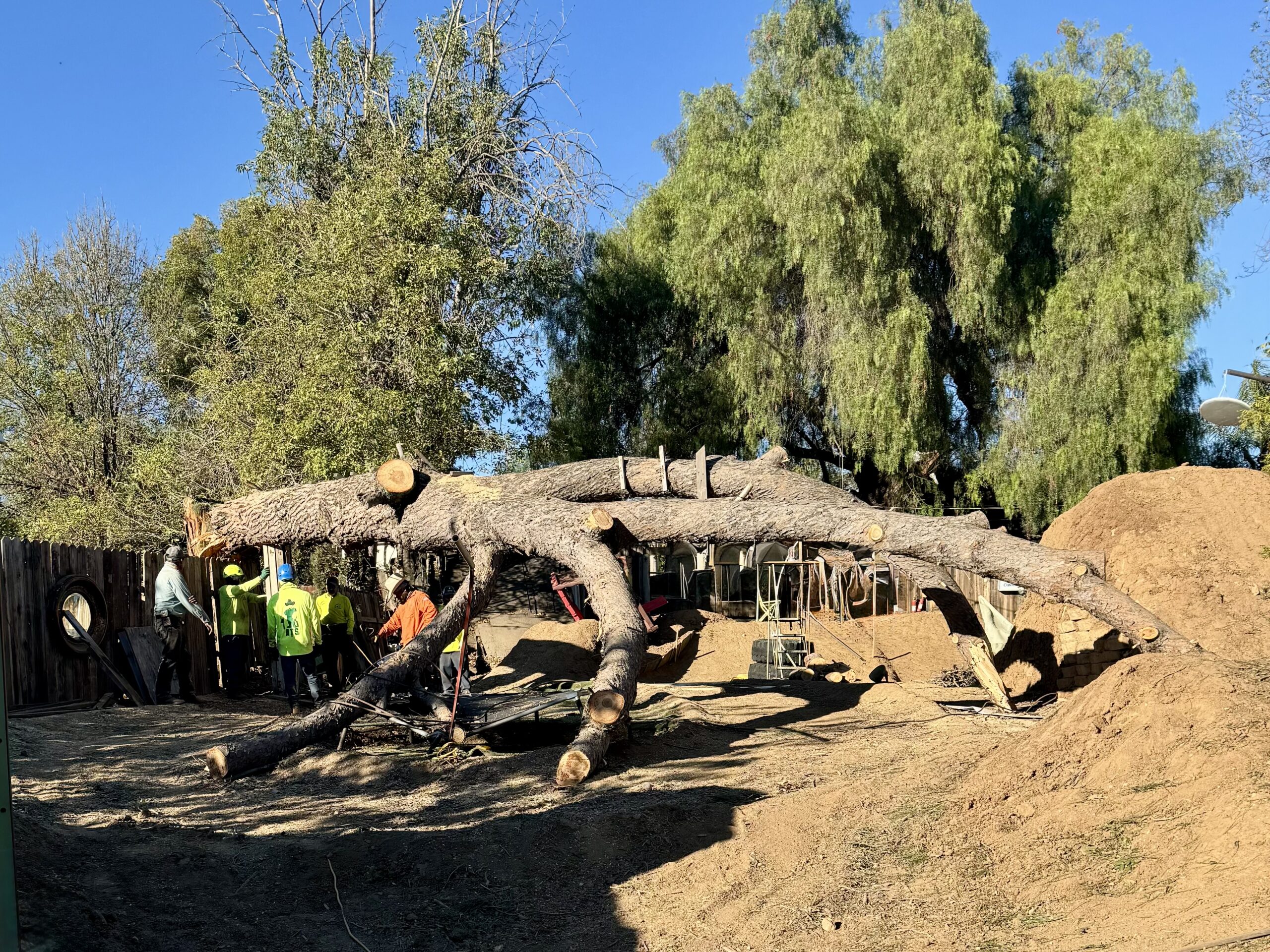
Southern California storms may not bring snow, but heavy rain and strong winds can still cause serious tree damage. During storm season in Los Angeles and Ventura County, fallen trees and broken branches are often the result of weakened root systems, excessive canopy weight, or structural issues that go unnoticed until weather conditions change. Understanding how storms affect trees and what steps can be taken ahead of time — helps reduce the risk of damage to homes, properties, and surrounding areas.
Why Storms Cause Tree Failures in Los Angeles
Unlike colder regions where the ground freezes, storms in Los Angeles saturate the soil. When soil becomes overly wet, tree roots lose stability, especially on slopes or compacted ground. Strong winds place additional stress on the canopy, increasing movement at the base of the tree.
Tree failures during storms are commonly caused by:
- Saturated soil reducing root support
- Overgrown or unbalanced canopies catching wind
- Dead, cracked, or weakened branches
- Structural issues from poor past pruning
- Trees leaning or growing too close to structures
Even trees that appear healthy can fail when these conditions combine during prolonged rain and wind.
Steps to Reduce Tree Damage Before Heavy Rain and Wind
Proactive tree care before storm season plays a major role in preventing damage. Addressing issues early helps reduce stress on trees and improves stability during severe weather.
Steps that help reduce storm-related damage include:
- Removing dead, cracked, or hanging branches
- Reducing overextended limbs to improve balance
- Inspecting trees that lean or grow on slopes
- Evaluating trees located near homes, fences, and utility lines
- Correcting structural issues caused by improper past pruning
Proper pruning improves airflow through the canopy, reduces wind resistance, and allows trees to better withstand storm conditions.
Warning Signs to Watch for During and After a Storm
Storm damage is not always immediate. Some issues develop hours or days after heavy rain or wind. Identifying warning signs early helps prevent further damage or injury.
Signs to watch for include:
- Hanging or partially broken branches
- Fresh cracks along the trunk or major limbs
- Soil lifting, shifting, or cracking near the base of the tree
- Trees that suddenly lean or change position
- Branches resting on roofs, fences, or utility lines
If any of these conditions are present, the area should be avoided until the tree can be evaluated safely.
Why Professional Tree Inspections Matter Before Storm Season
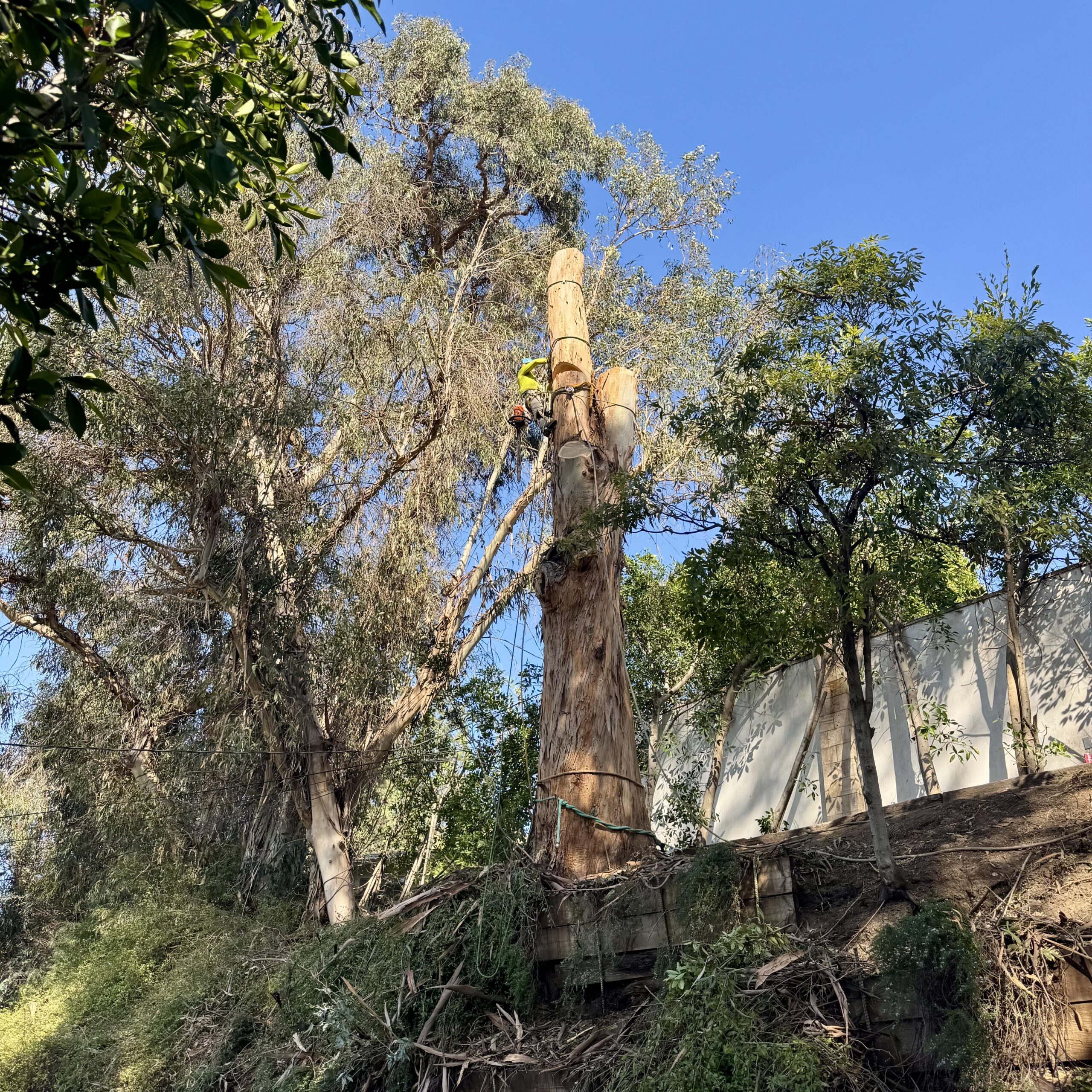
Professional tree inspections focus on structure, balance, and overall stability. Trained crews assess how weight is distributed throughout the canopy, how the tree responds to movement, and whether root systems are compromised.
Improper or DIY pruning can unintentionally increase risk by weakening branch attachments or creating imbalance. Professional inspections help identify problems early and determine whether pruning, reinforcement, or removal is the safest solution.
When Immediate Tree Service Is Necessary
Some storm-related situations require immediate professional assistance to prevent further damage or safety risks.
Tree service should be contacted promptly if:
- A tree or large limb has fallen
- A tree is leaning toward a structure
- Roots have shifted or lifted from the ground
- Branches are entangled in power lines
- Storm damage has made a tree unstable
Timely response helps reduce additional damage and ensures safe cleanup.